The current situation means that Erasmus+ project participants are unable to travel and mobilities that are interrupted or postponed during this period will be recognized as force majeure. To respond to these uncertainties, we are applying the maximum flexibility we can in the implementation of the
programme.
As the corona virus prevents us from coming together and discussing “Is migration within the EU a blessing or a challenge?” at our next Youth Conference in Lithuania in May, the coordinators of the Erasmus plus project “Traces of Otherness” decided to be innovative: With the project “European
matters: an interview with a European celebrity” we want our students to stay in contact and keep going on discussing European matters. So in the upcoming future, we will post reports about digital talks with students from all four countries present and discussing personal relationships to Europe, professional experiences in Europe as well as actual political matters.
https://www.kmk-pad.org/aktuelles/artikelansicht/europaeischer-austausch-per-videokonferenz.html
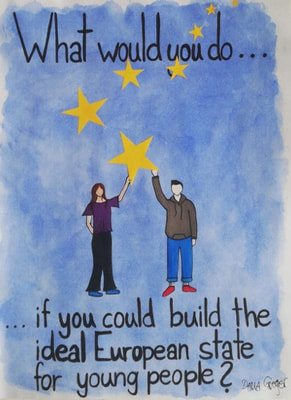
The Ideal European State for Young People
|
|
|
|
Dear all,
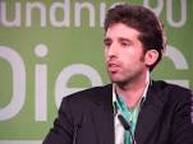
to support you while working on this project, politicians, influencers and editors have thought about the same question: "What would you do... if you could build the ideal European state for young people?". Boris Palmer, Mayor of Tübingen and a member of the Green Party presents his ideas (https://en.wikipedia.org/wiki/Boris_Palmer). You can find it in the "material-folder" on etwinning! Enjoy and have a great start! Migration – within the EU: Blessing or Challenge? Interactive-images: "Migration 1990 until today" "Emigration after the Second World War" "Immigration after the Second World War" "Migration after the First World War" "Migration in the 19th - beginning of the 20th centuries" |
|
Digital Talks with European “Celebrities”!
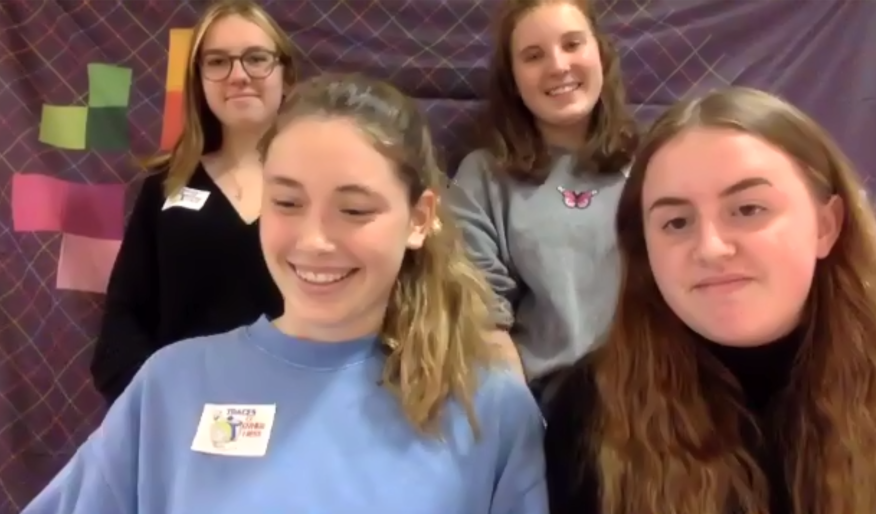
During the lockdown because of COVID, the Erasmus plus students in Germany, the Netherlands, North-Macedonia and Lithuania did not have the possibility to travel as planned. This pandemic did not hinder our work but only made us concentrate and shift to the field of communicating digitally. From April to October, the Erasmus plus program “Traces of Otherness” initiated digital conferences called European Matters with famous politicians, state officers and Erasmus plus coordinators to learn more about Europe in this special time. During the time of one hour, the students from the four given countries could ask the politicians questions concerning personal career paths, points of view, political experiences and the COVID crisis.
|
Germany (April 2020)
Our first talk focused on the European Union law enforcement agency with Mr Max-Peter Ratzel as its former director. Mr Ratzel regards himself as a living example of European history as he was born in the Saarland in 1949 when the region was governed by France as a consequence of the Second World War. As a child he experienced both strict border controls between the Saarland and Germany and later a united Europe after the Schengen Agreement. With his vast experience he could tell the international group of students how the police is able to work across Europe and strengthen their communication concerning crimes and the law. Mr Ratzel emphasized digital possibilities now helping the European states to fight terrorism. Quotes of his talk: “Travel the world and get to know as many countries as possible.” “Within Europe, we should be open to differences and similarities and strengthen our community by focusing on the positive possibilities originating from this.” “The European Union has not been completed yet”. |
North-Macedonia (May 2020)
For our second talk, we met Mr Veton Latifi works on theories about international relations and political sciences. He is a professor of political sciences and international relations at the South-West European University in Macedonia. Since 2007 he has been a president of the Institute for Democracy and Development – a think-tank organization dealing mainly with the training of the young local leaders of political parties of different cultural backgrounds. In 2007, he was also awarded the Annual Prize “The best Scientist/ Researcher of the year” by the Macedonian Academy of Sciences and Arts in Skopje.
Quotes of his talk:
“People who work together on a project enrich the work process because of their different experiences, cultural backgrounds and points of view.”
“Always carry books with you as they are your way to achieve more knowledge”
“Have dreams and goals at the same time. Don’t give them up, even if times are rough.”
For our second talk, we met Mr Veton Latifi works on theories about international relations and political sciences. He is a professor of political sciences and international relations at the South-West European University in Macedonia. Since 2007 he has been a president of the Institute for Democracy and Development – a think-tank organization dealing mainly with the training of the young local leaders of political parties of different cultural backgrounds. In 2007, he was also awarded the Annual Prize “The best Scientist/ Researcher of the year” by the Macedonian Academy of Sciences and Arts in Skopje.
Quotes of his talk:
“People who work together on a project enrich the work process because of their different experiences, cultural backgrounds and points of view.”
“Always carry books with you as they are your way to achieve more knowledge”
“Have dreams and goals at the same time. Don’t give them up, even if times are rough.”
Netherlands (June 2020)
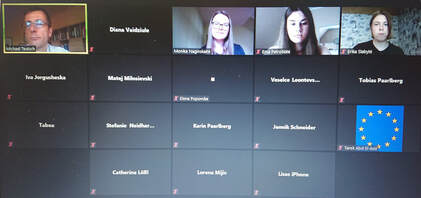
Michael Teutsch, general director of the Erasmus plus program was our guest in June organized by the Dutch. Mr Teutsch had always been very interested in education in Europe because he not only grew up in Germany but also visited a school in Italy and was part of the Erasmus exchange program as a student. Mr Teutsch praised the benefits of a life in Europe, especially concerning world-wide problems such as climate change.
“Erasmus plus is the best of Europe”
“Please spread the word about the Erasmus plus program so that other teenagers and students can experience exchanges as well.”
Michael Teutsch, general director of the Erasmus plus program was our guest in June organized by the Dutch. Mr Teutsch had always been very interested in education in Europe because he not only grew up in Germany but also visited a school in Italy and was part of the Erasmus exchange program as a student. Mr Teutsch praised the benefits of a life in Europe, especially concerning world-wide problems such as climate change.
“Erasmus plus is the best of Europe”
“Please spread the word about the Erasmus plus program so that other teenagers and students can experience exchanges as well.”
Lithuania (October 2020)
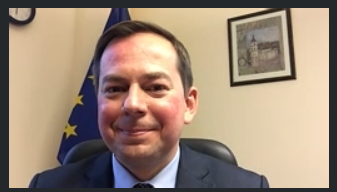
With the new school year, the Lithuanian organizers initiated a new digital talk. This time, the group of students was able to meet with Arnoldas Prackevicius, who represents the European Commission in Lithuania. From 2012-2016 he was external policies adviser to the president, advising EP President Martin Schulz on Eastern Partnership, Russia, Baltic/Nordic dimension, Western Balkans and Asia. Before his career in the European Parliament, he studied at the Institute of Journalism of Vilnius University (VU) and worked as a journalist in the national and regional press. During his studies, he did an internship at the U.S. Senate, the office of Illinois Senator Richard Durbin, and worked at Free Europe Radio in Washington. Mr Prackevicius explained the students the special role of Lithuania between being part of the European Union and having contact to Russia as the representative of the former Soviet Union.
“No democracy can be perfect on its own but there are always institutions needed which persevere democratic thinking.”
“The economic crisis as well as corona show that Europeans aspire to improve the European Union.”
“The European countries should always try to find a “European” solution and not a national one.”
Project coordinator Dr. Stefanie Neidhardt (Germany)
With the new school year, the Lithuanian organizers initiated a new digital talk. This time, the group of students was able to meet with Arnoldas Prackevicius, who represents the European Commission in Lithuania. From 2012-2016 he was external policies adviser to the president, advising EP President Martin Schulz on Eastern Partnership, Russia, Baltic/Nordic dimension, Western Balkans and Asia. Before his career in the European Parliament, he studied at the Institute of Journalism of Vilnius University (VU) and worked as a journalist in the national and regional press. During his studies, he did an internship at the U.S. Senate, the office of Illinois Senator Richard Durbin, and worked at Free Europe Radio in Washington. Mr Prackevicius explained the students the special role of Lithuania between being part of the European Union and having contact to Russia as the representative of the former Soviet Union.
“No democracy can be perfect on its own but there are always institutions needed which persevere democratic thinking.”
“The economic crisis as well as corona show that Europeans aspire to improve the European Union.”
“The European countries should always try to find a “European” solution and not a national one.”
Project coordinator Dr. Stefanie Neidhardt (Germany)
A safer and better world and Europe! Mr. Ratzel’s insightful view on the topic
Europe! A diverse continent with different cultures, people and histories. But there is one thing Europe is known best for and that is UNITY. The European Union has existed for nearly a century and at that time, it served as a benchmark for collaboration and peace among nations. However, today we’ll be looking at what it takes to keep Europe secure from all of the outside and inside threats, and one of the people who has helped maintain peace and strength within the EU.
Dear readers, I’m talking about none other than former head of Europol Mr. Ratzel.
When it comes to security in this very important socio-economic and ever-growing zone, most people would think that use of force and harsher policing policies are inevitable. Mr. Ratzel shows us quite the opposite. When asked whether he identified as a German or European, he said that he firstly and primarily identified as a human being just like everyone else. Then, he said that he wouldn’t identify as a global citizen nor European despite his lifestyle and upbringing, but rather as a person with many faces. He was also asked what he liked and disliked about his former job in policing to which he replied that he liked everything, and he was very happy of that experience and the fact that he had met many clever, talented and hardworking people along the way.
As a man who has travelled to over 110 countries and recognizing that even regionally there are differences and similarities among nations, we asked him whether he recognized any similarities and differences among European countries, to which he said that he believed in a common European culture where Europe had the same roots, the same culture and the same experiences from 1000 years ago. Though he acknowledged the difference in languages and traditions, he still believes that the very mixture of cultures is what makes Europe unique.
After his time in office, he worked as a private political advisor who helped politicians from developing nations who wanted to become EU member states. Specifically, nations situated in the Balkan peninsula. He believed that the main issue plaguing this region was corruption and that he advised politicians to offer better pay to all those working in the legal sector to minimize it. He said that the Balkan region is extremely important for Europe and Europol because he believes that it is one of the main areas used by criminals to smuggle and traffic drugs, weapons and humans into and outside Europe. He also said that contributions and benefits would be mutual for these countries and the EU upon them joining. One of the examples that he offered is through faster policing and police work as well as better joint operations. What this meant is that they could conduct these operations without needing a third country through which they should cooperate. Although he agreed that the Balkan nations were part of Europe geographically, the same could not be said from a political aspect and he strongly believes that these nations will have to put the maximum amount of effort to get into the EU.
Finally, he was asked a question about the current ongoing situation with the Coronavirus, and how he sees a “post-corona” Europe. To this he said that it would most likely be difficult and he urged everyone to develop themselves in the right direction. However, he stated that he wanted us to do more regarding ecological problems and help globalize the Earth. He said that we should help the world become fairer and better for everyone, so that the other nations’ problems, don’t become ours.
In the end, we, students from North Macedonia, would like to express enormous gratitude to Mr.Ratzel for bringing us Europol and Europe in general, closer to us. Understandably, huge thank you to Ms. Stefanie Neidhardt without whom this interview would not have happened. In a word, it was a memorable interview, with an exceptional person. Hopefully you enjoyed and stay tuned for the next one.
Written by students Hristo Nikolov and Erjona Azizi R. North Macedonia
“Everyone has to have dreams and should make themselves as flexible as possible to achieve them”
The success of the first videoconference, in which Erasmus+ project “Traces of Otherness: Developing Citizenship” participants discussed topics relevant to the European Union and young people with The Head of Europol from Germany, Max-Peter Ratzel, inspired preparations for the second one. On the 8th of June, the members of the project had a fantastic opportunity of interviewing Prof. Dr Veton Latifi – a theoretician and professor of political sciences and international relations at the South-East European University of Macedonia (SEEU); an author of books on politics; a speaker at many universities in Europe and the USA. Professor Veton Latifi has been awarded the Annual Prize for “Personality of the Year by the Foundation Image and Media from Albania” for his contribution in strengthening the democracy in Macedonia, and promoting the Euro-Atlantic values in the Balkans.
The participants of the video conference had to prepare questions on four topics: professional life, future ideas for Europe, actual political matters and personal experience. During the meeting, every student got their chance to ask questions, which interested them most of all. The questions varied from personal views on politics and current affairs. Students from Lithuania were interested in how democracy should work in a multicultural country; if "The best Scientist/ Researcher of the year" prize made an impact on professor’s career and work; what was more important for a career - personal qualities or knowledge. Students from other countries also shared their views on human rights and racism, they discussed the situation in Europe after pandemic. Each question was answered in-depth manner, the comments came out to be interesting and often inspirational.
Prof. Dr Veton Latifi stated that everyone has to have dreams and should make themselves as flexible as possible to achieve them. He added that listening to critics is what makes one improve because it is the voice of the community and according to him it is a characteristic feature of a leader.
Following the video conference cycle, on the 17th of June, the participants of the project, joined the third international Zoom conference. This time student had a unique opportunity to interview Michael Teutsch (the head of Education in Brussels).
Students from Lithuania as well as students from other countries (The Netherlands, Germany and North Macedonia) after two pervious interactive conferences felt more confident asking Mr. Teutsch his opinion about education, development of European awareness, citizenship and his experience on participating in International projects. The students were given information on how Mr. Teutsch became the head of Education and his professional life. The speaker also advised us on how to achieve our goals and shared his opinion on studying abroad.
EU club members from four countries discussed the most common problems nowadays, like COVID-19, discrimination, time management and etc. Mr. Teutsch talked about how the movement "Black lives matter" has influenced Europe.
This interview was really enlightening and useful for youngsters in their everyday life.
Written by students Viktorija Lešaitė, Monika Naginskaitė, Ema Petrošiūtė Lithuania
